


Electricity load-shedding and rising utility bills have pushed thousands of Pakistani households and businesses toward solar energy. But before making the switch, one question comes up again and again: what is the actual solar plate price in Pakistan right now, and what factors make it go up or down? This guide breaks down everything you need to know before buying solar panels for your home or office.
What Is a Solar Plate?
A solar plate, more technically known as a solar panel or photovoltaic (PV) module, is a device made of silicon cells that converts sunlight directly into electricity. According to Wikipedia, solar panels are typically packaged into standardized units and connected in arrays to generate usable power for homes, businesses, and industrial setups. In Pakistan, these panels are commonly used to run home appliances, water pumps, and even entire commercial operations, especially in areas with frequent power outages.
Current Solar Plate Price in Pakistan
Prices vary significantly depending on the brand, wattage, and panel technology. On average, buyers can expect the following price ranges:
- Monocrystalline panels: Rs. 28 to Rs. 35 per watt
- Polycrystalline panels: Rs. 22 to Rs. 28 per watt
- Local/unbranded panels: Rs. 18 to Rs. 24 per watt
For a standard household setup, a single 180-watt to 200-watt panel usually costs between Rs. 5,000 and Rs. 8,000, while larger 400-watt to 550-watt panels used in bigger systems can range from Rs. 12,000 to Rs. 20,000 per unit. These figures fluctuate based on the US Dollar exchange rate, import duties, and seasonal demand, so it’s always a good idea to check with local suppliers before finalizing your budget.
Solar Plate Price by Wattage
Here is a quick reference table showing approximate prices for different panel wattages available in the Pakistani market:
| Wattage | Approximate Price (Rs.) |
| 260 Watt | 8,000 – 9,500 |
| 300 Watt | 9,500 – 11,000 |
| 330 Watt | 10,500 – 12,500 |
| 400 Watt | 12,500 – 15,000 |
| 450 Watt | 14,000 – 16,500 |
| 500 Watt | 16,000 – 18,500 |
| 550 Watt | 17,500 – 20,000 |
| 580 Watt | 19,000 – 21,500 |
| 590 Watt | 19,500 – 22,000 |
Note: These are estimated market prices and can vary based on brand, dealer, and currency exchange rate. Always confirm current rates with a local supplier before purchasing.
City-Wise Solar Plate Prices in Pakistan
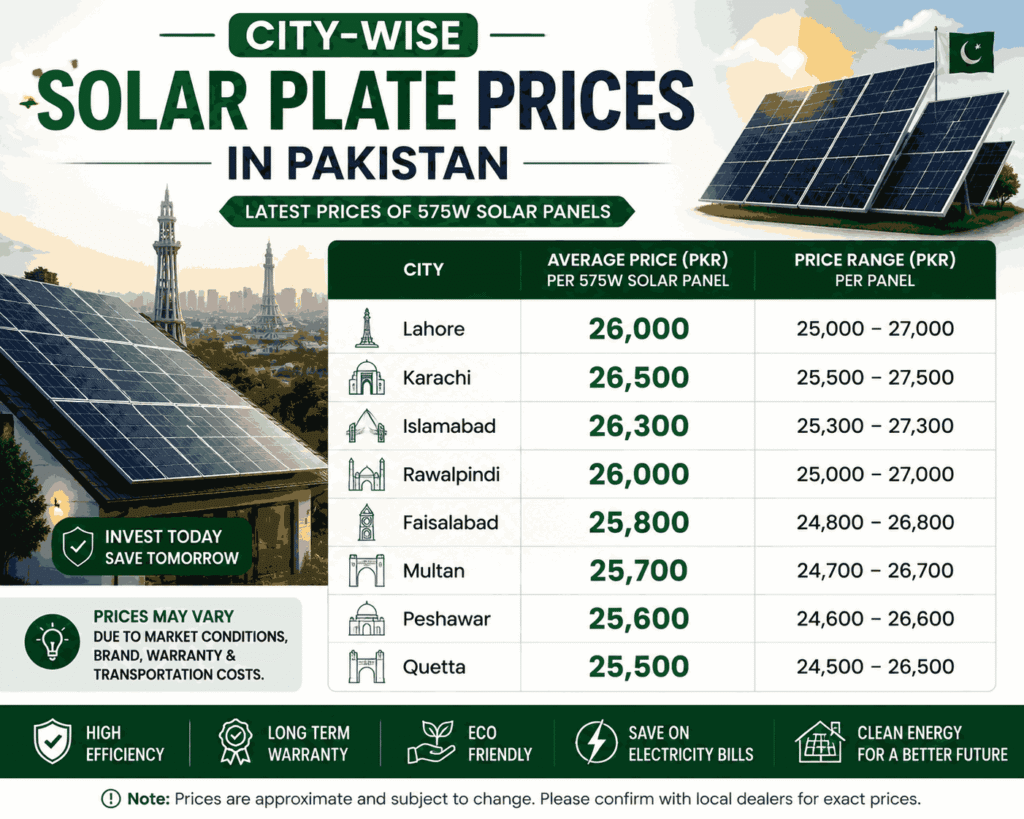
Solar panel prices can also differ slightly from city to city due to transportation costs, dealer margins, and local demand. Here’s a general comparison across major cities:
| City | Approximate Price Range (per panel) |
| Lahore | Rs. 8,000 – 27,500 |
| Karachi | Rs. 7,800 – 26,000 |
| Islamabad | Rs. 8,200 – 28,000 |
| Gujranwala | Rs. 8,000 – 27,400 |
| Sialkot | Rs. 8,100 – 26,800 |
| Multan | Rs. 8,300 – 27,800 |
| Bahawalpur | Rs. 8,400 – 28,200 |
Prices are approximate and based on wattage, brand, and current market conditions. It’s recommended to compare quotes from at least two or three local dealers in your city before finalizing a purchase.
Factors That Affect Solar Plate Price
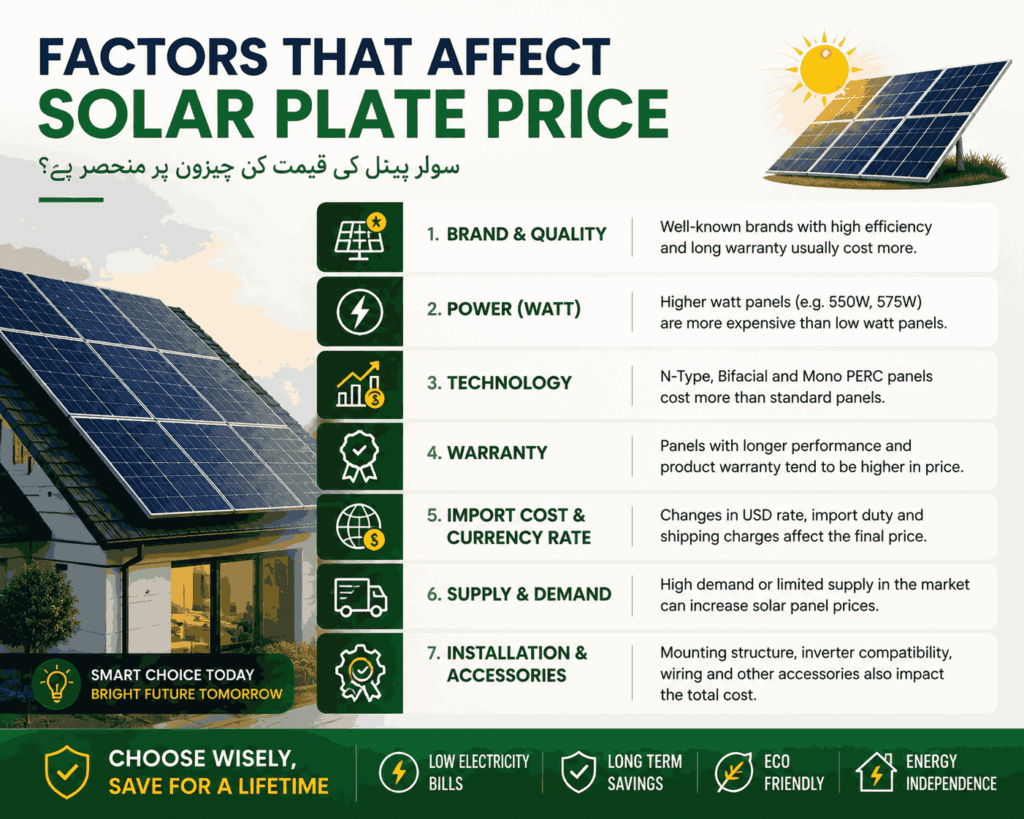
Several factors influence the final cost you pay, and understanding them helps you avoid overpaying:
Panel Type and Brand
Branded panels from companies like Longi, Jinko, and Canadian Solar tend to be more expensive but come with better efficiency and longer warranties, usually 20 to 25 years. Local or unbranded panels are cheaper upfront but may degrade faster and lack proper after-sales support.
Wattage and Efficiency
Higher wattage panels generate more electricity per square foot, which means fewer panels are needed for the same output. While the per-panel cost is higher, the overall system size and installation cost can actually decrease.
Import Duties and Currency Fluctuation
Since most solar panels used in Pakistan are imported, changes in the exchange rate and government import policies directly affect retail prices. This is why prices can shift within weeks even without a change in global manufacturing costs.
Installation and Accessories
The panel price is only part of the total cost. Inverters, batteries, mounting structures, wiring, and professional installation charges add significantly to the final bill. A complete solar system for an average home can range from Rs. 150,000 to Rs. 600,000 depending on load requirements and battery backup.
Is Buying Solar Panels Worth It in Pakistan?
Given the frequency of load-shedding and consistently rising electricity tariffs, solar energy has become one of the most practical long-term investments for Pakistani households. Most systems pay for themselves within three to five years through reduced electricity bills, and after that, homeowners enjoy years of low-cost or free electricity, especially during daylight hours.
That said, it’s important to size your system correctly. Buying more panels than you need increases upfront cost unnecessarily, while undersizing means you won’t get enough backup during outages. A proper load assessment before purchase is essential.
Tips Before You Buy Solar Panels
- Always compare prices from at least three suppliers before purchasing
- Check the panel’s warranty terms and ask for the manufacturer’s efficiency certificate
- Avoid extremely cheap, unbranded panels with no traceable manufacturer
- Factor in installation, wiring, and maintenance costs, not just the panel price
- Hire a qualified electrician to handle wiring and system setup safely
Get Professional Help for Installation and Electrical Work
Once you’ve decided on the right panels for your budget, proper installation is just as important as the purchase itself. Faulty wiring or incorrect mounting can reduce system efficiency and even create safety hazards at home. If you need reliable, experienced professionals to handle the electrical side of your solar setup, or any other home maintenance and repair work, HunarCare offers trusted electrician services in Lahore, along with plumbing, AC repair, painting, and carpentry solutions, all backed by trained technicians and transparent, upfront pricing.
Final Thoughts
The solar plate price in Pakistan continues to shift based on import costs, currency value, and market demand, but the long-term savings from switching to solar remain significant for most households. Whether you choose monocrystalline or polycrystalline panels, the key is to buy from a trusted supplier, size your system correctly, and get professional installation to ensure your investment pays off for years to come. Doing your research now, both on panel prices and installation quality, will save you money and hassle in the long run.
Frequently Asked Questions
How many solar plates are needed to run one AC?
For a standard 1.5-ton inverter AC, you typically need around 8 to 10 panels of 300 to 330 watts each (roughly 2,500 to 3,000 watts total), depending on the AC’s efficiency and daily usage hours.
What size solar plate is required for a 1-ton AC?
A 1-ton inverter AC generally needs about 5 to 6 panels of 300 watts each, or an equivalent total system size of around 1,500 to 1,800 watts.
Can a single solar plate run a fridge or washing machine?
A single 300-watt panel alone usually cannot reliably run heavy appliances like a fridge or washing machine, since these need consistent power throughout the day. A small combination of 2 to 3 panels along with a battery backup is a more practical setup.
Which is better: fewer high-wattage panels or more low-wattage panels?
Fewer high-wattage panels (400W and above) are generally better because they reduce the number of panels needed, save roof space, and lower overall installation and wiring costs for the same total output.
How long do solar plates last in Pakistan’s climate?
Most quality solar panels come with a 20 to 25-year performance warranty and can function efficiently for 25 to 30 years, even under Pakistan’s hot summer conditions, provided they are installed and maintained properly.
Does solar plate price include installation charges?
No, the panel price only covers the panel itself. Inverter, battery, mounting structure, wiring, and labor charges are separate and should be added to your total budget when planning a solar system.